
Recipes for Foraged Foods
A Simple Wild Garlic Pesto Recipe
Apr
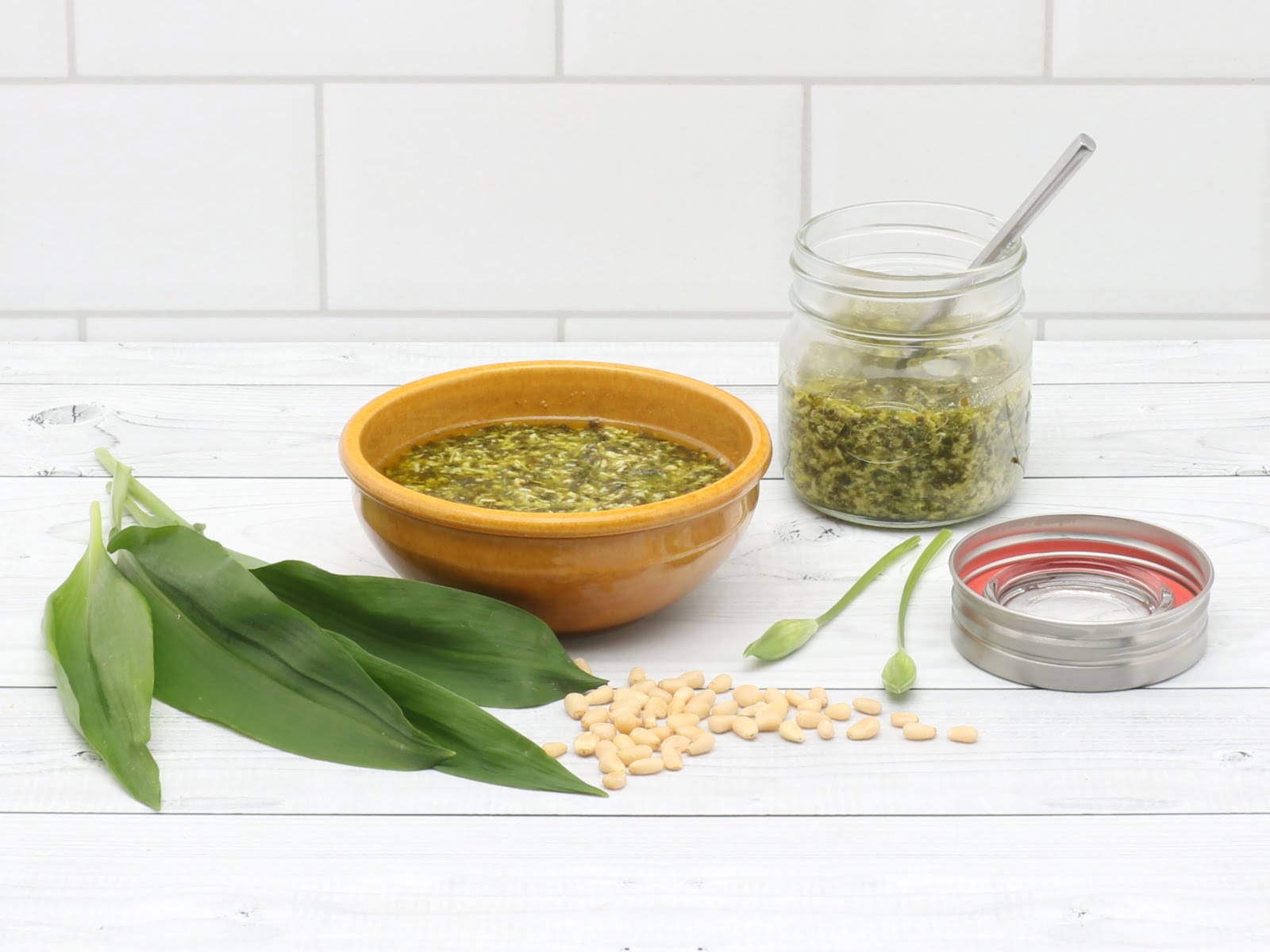
Spring heralds the start of wild garlic season. This wonderfully aromatic plant so prized by foragers can be found in abundance in many of our ancient woodland through March, April and May.Follow our simple wild garlic pesto recipe for a real seasonal treat, traditionally stirred through pasta but also incredible in a sandwich.
Ramsons, Allium ursinum, is the main ingredient for this simple wild garlic pesto recipe but the few flowered garlic Allium paradoxum or the three cornered leek Allium triquetrum can also be used. Check out our guide to identifying and foraging for the five most common species of wild garlic. Use young leaves from the start of the season if possible and flower heads from before seeds have started to form.
Please forage for these plants responsibly. If you see evidence of over-picking or trampling of a wild garlic colony please think again and look elsewhere. Keep waste to a minimum and collect only what you need.
Ingredients
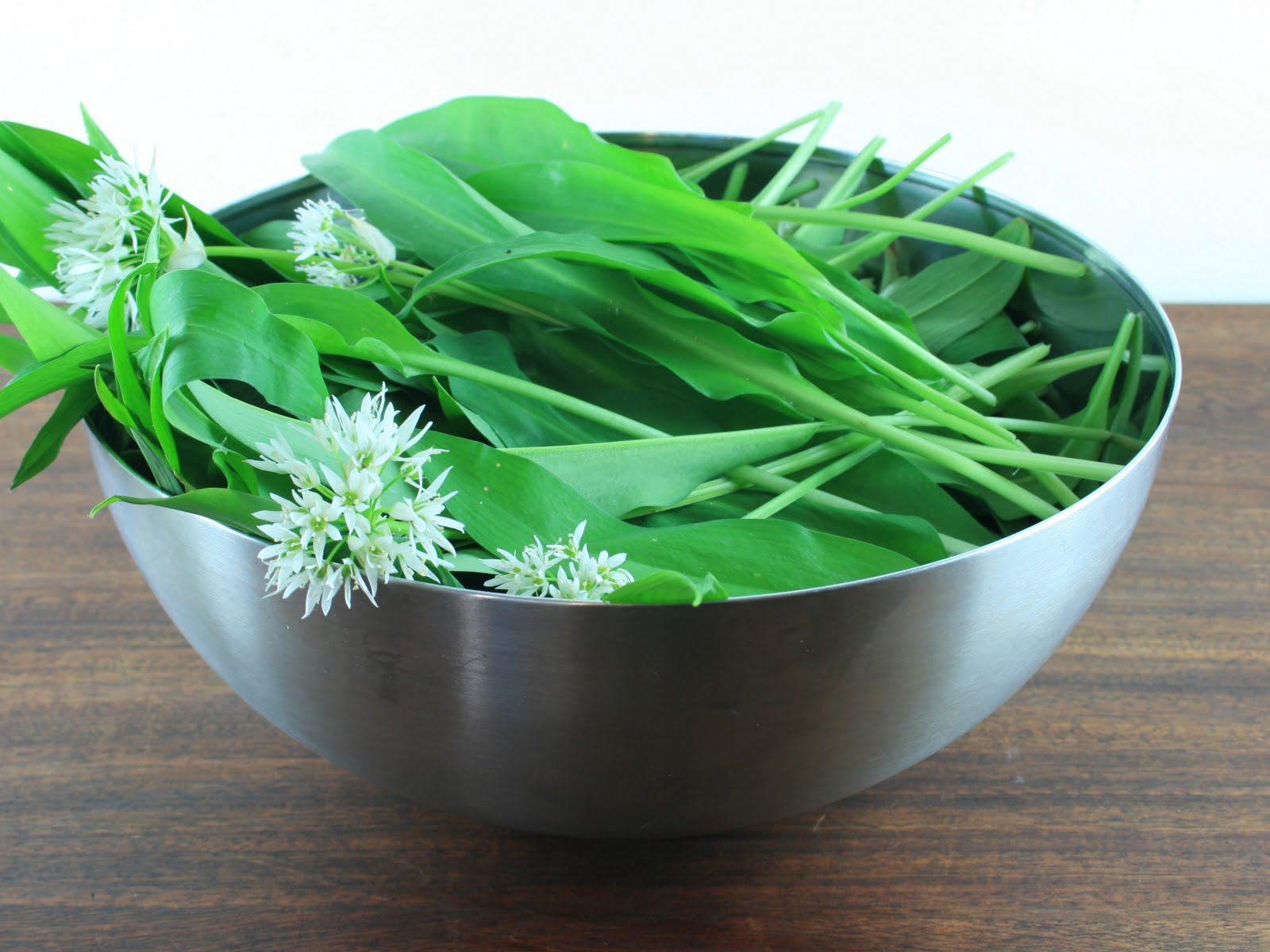
This recipe produces around 1 litre of wild garlic pesto.
- 200g of wild garlic leaves, stalks and flower heads.
- 400ml of fresh extra virgin olive oil.
- 100g of pine nuts.
- 2 tbsp lemon juice.
- 100g grated parmesan cheese.
- Salt and pepper.
Method
- Toast the pine nuts in a pan over a medium heat until golden brown. Set aside to cool.
- Rinse your wild garlic, cleaning away any soil or insects.
- Blanche the wild garlic for 10 seconds andimmediately cool under cold running water.
- Shake off excess water and pad with kitchen roll until somewhat dry.
- Add the wild garlic, olive oil, lemon juice and pine nuts to a food processor. Blend to a rough paste.
- Transfer to a bowl and stir through the grated parmesan.
- Season to taste.
Substitutions
Walnuts are a particularly good and traditional alternative to pine nuts for making pesto. Using lime juice instead of lemon imparts a fruity zing to the recipe.
Preserving and Storing Your Wild Garlic Pesto
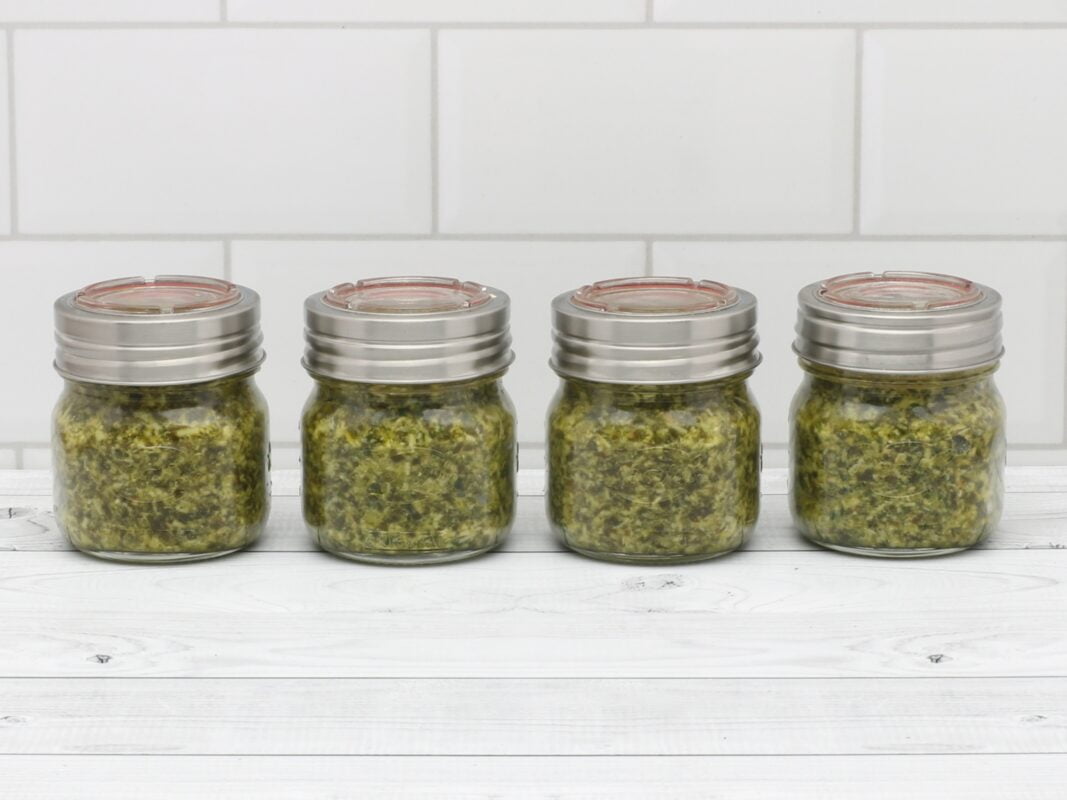
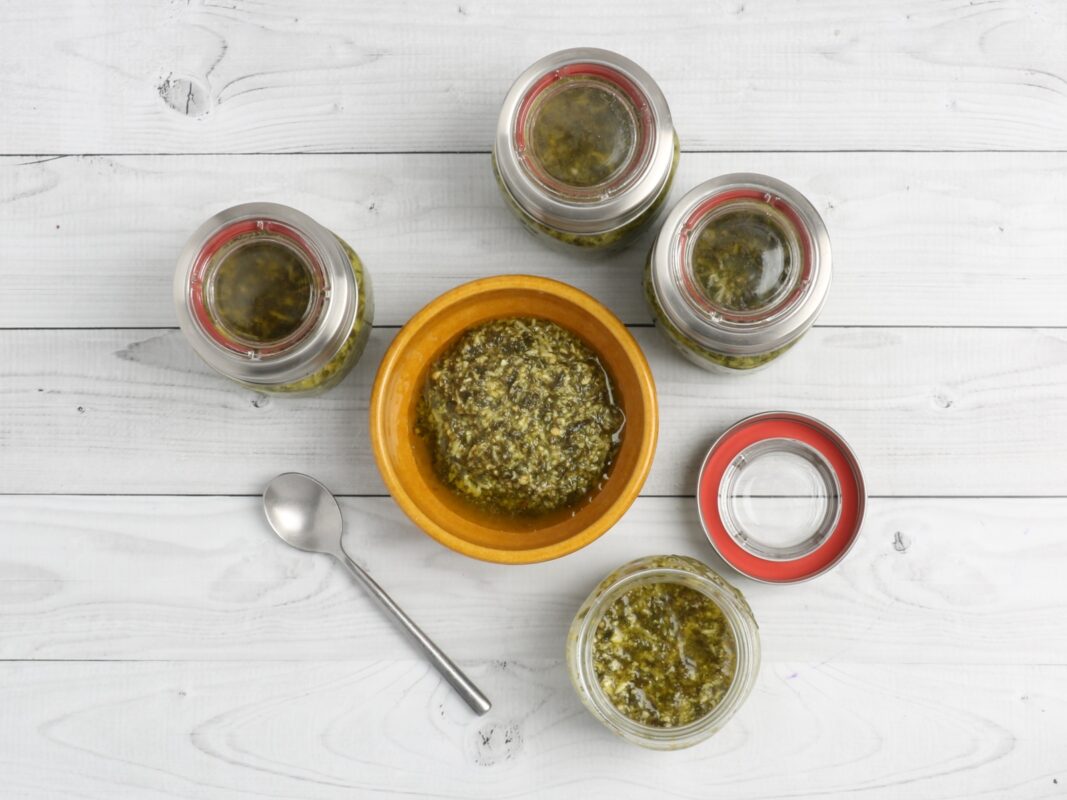
Whatever container or jar you use add some additional oil to the top. Under this layer of oil the pesto should be good for at least a fortnight kept in your fridge. For longer term storage freeze in jars, zip-lock bags or tupperware containers. I pack single portions into 250ml preserve jars leaving plenty of headroom to allow for expansion and to avoid cracking in the freezer. These Sunny Cap jars from Pearl are perfect for the job, they feature a glass lid with reusable seal and rustproof stainless steel bands.
Oil based recipes such as this cannot be safely canned or pasteurized at home.
Available From Our Shop

Excellent recipe using these bountiful plants. It really does make me feel like spring is here! The Pearl jars look fantastic in my pantry and are much easier to use and clean. Thanks a lot!
Pingback: The Last Preserve - Wild Garlic; Homemade Ideas. - The Eco News