
Foraging for Wild Plants and Fungi
Not Just Ramsons.
Foraging for the Five Most Common Species of Wild Garlic.

Apr
Although ramsons are our best known and most abundant wild garlic it is not the only wild plant with a strong garlic flavour to grace these shores.
When we think of wild garlic ramsons spring immediately to mind. This beloved native plant floods many of our woodlands with the heady scent of garlic every spring. Its abundance and usefulness in the kitchen has long made ramsons a seasonal staple for foragers. Few however are aware that Britain is host to other species of wild garlic, some native and some naturalised. In this article we look at some commonly found wild plants with a garlic flavour. Four are representatives of the onion family Allium, and one member of the hedge mustard family Alliaria.
Ramsons

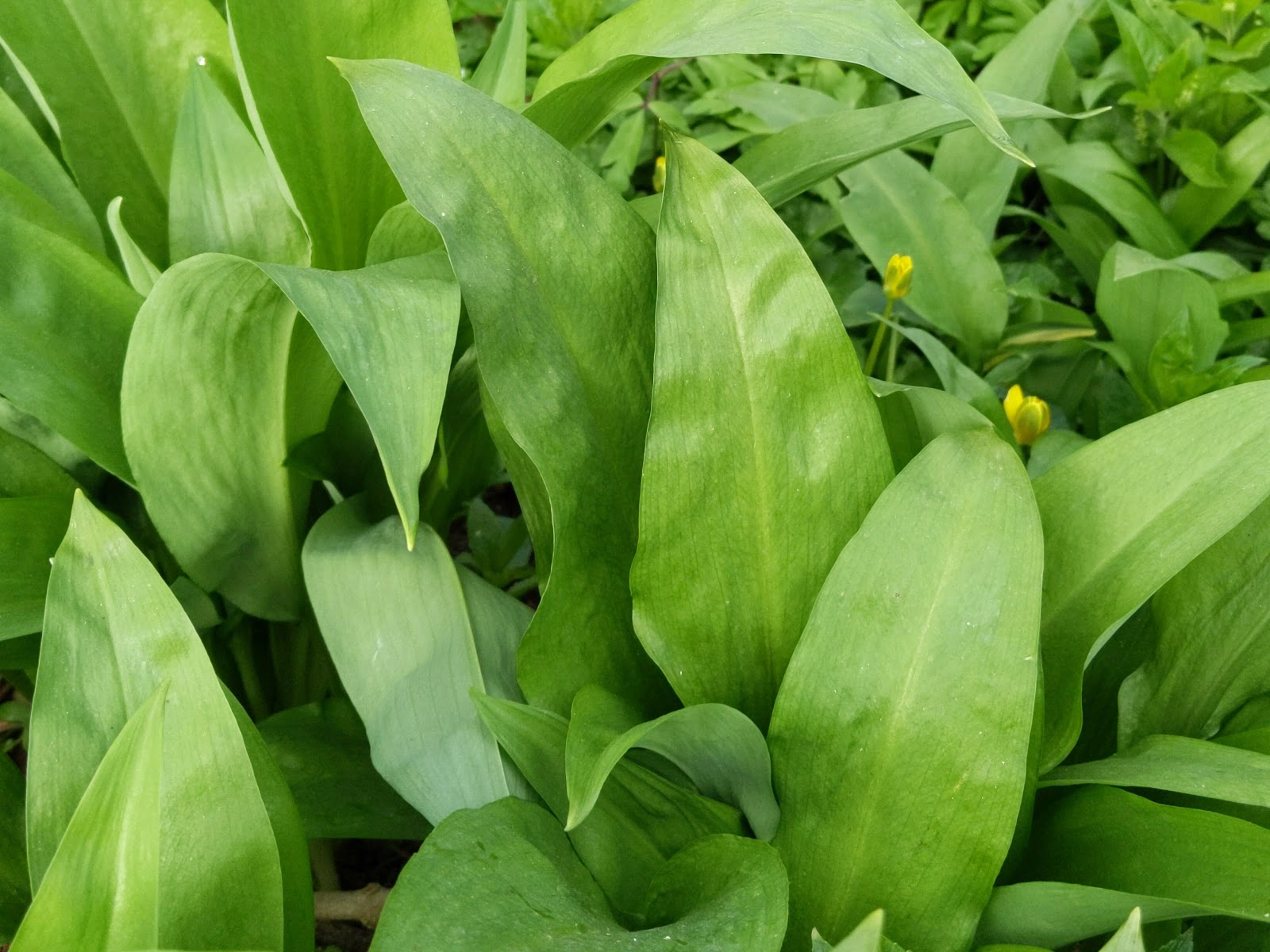


Allium ursinum, also known as ramsons or bear garlic, is the ubiquitous wild garlic abundant across much of Europe. This is primarily a plant of moist and shady woodlands, frequently found growing in very high densities. Ramsons can also be found growing on the banks of rivers and streams.
The bright green, broad, elliptical lanceolate shaped leaves begin to emerge from the bulbs in late May and can reach up to 20cm in length and 5cm in width. Flowers begin to open in late April and consist of a single spherical cluster or umbel containing many individual flower heads each with 5 petals. The flower stalks have a triangular cross-section. All parts of the plant will smell strongly of garlic if rubbed between your fingers. When in flower ramsons effuse the unmistakable scent of garlic into the air.
All parts of the plant are edible. The leaves are best harvested before flowering, the quality deceasing rapidly once the plant begins to set seed. The flowers have a more subtle taste than the leaves and are particularly good as the buds first break open. Beware of harvesting small pollen eating insects along with the flower heads! Do not harvest the bulbs, the leaves and flowers are by far the best parts of the plant in terms of flavour anyhow.
The flower buds and stalks are great for fermenting or pickling. Check out our fermented wild garlic buds recipe and vinegar pickled wild garlic bud recipe.
Please forage for these plants responsibly. If you see evidence of over-picking or trampling of a wild garlic colony please think again and look elsewhere. Keep waste to a minimum and collect only what you need.
The Three-Cornered Leek
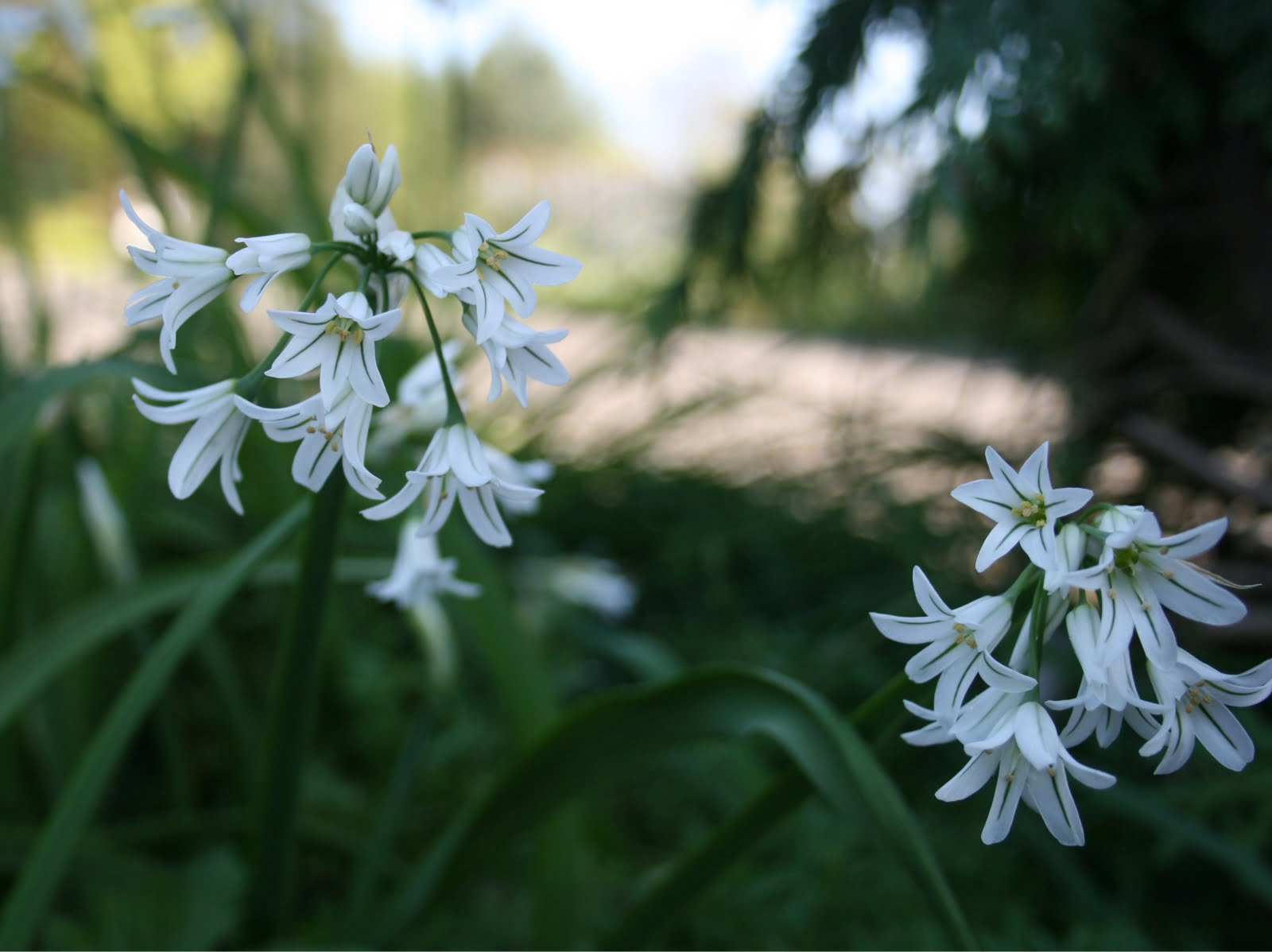
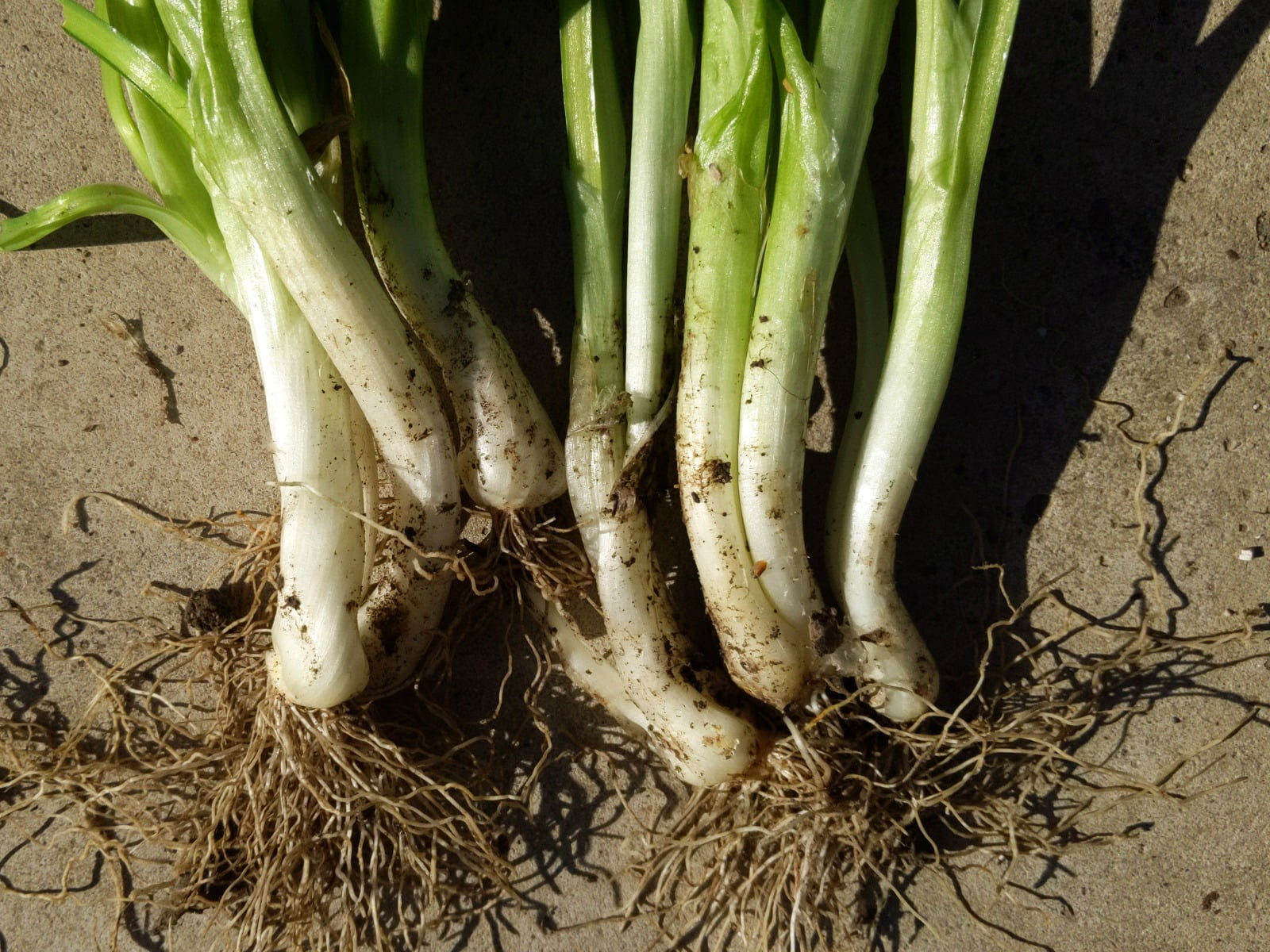
Allium triquetrum is most commonly known as the three cornered leek or snow bell. This wild garlic originates from southern Europe. Escaped into the wild from gardens this plant is naturalised in the UK, albeit confined to warmer coastal and southern regions. Look for the three cornered leek along hedgerows, woodland edges, verges and in gardens.
The long thin leaves feature a pronounced ‘V’ shaped profile and begin to emerge in late March growing up to 30cm in length and 2cm wide. By late April the flowers emerge consisting of a cluster of individual heads with 6 petals, each with a bright green stripe. The flowers are carried atop a long stalk with an obvious triangular, three-pointed cross section. It is this stalk that gives this plant its common name. If rubbed between your fingers the plant will smell strongly of garlic.
Like the ramson all parts of the three cornered leek are edible, the flavour can be described as a pleasant cross between garlic, onion and chives. The leaves and stalks are a less tender than the others featured here and benefit from being harvested early in the season. The plants can also be uprooted, the long bulbs are particularly good eating used as an alternative to leeks or spring onions. As this species is often highly invasive I would encourage harvesting as many as you can in this way.
Few-Flowered Garlic
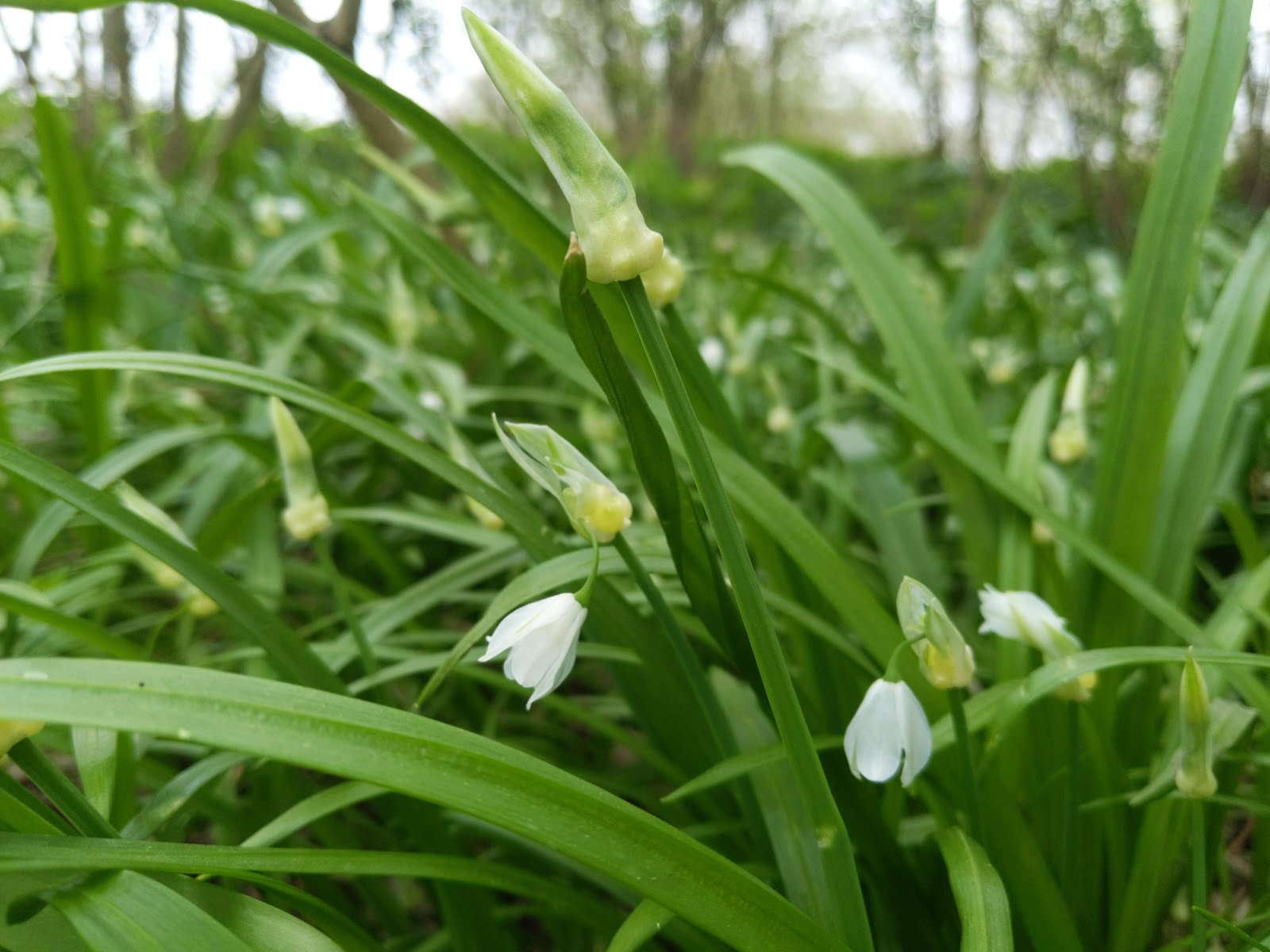

Allium paradoxum the few-flowered garlic or few flowered leek is another garden escapee widely naturalised across the United Kingdom. A native to the mountains of the Caucasus and Iran this species is considered to be invasive across much of Europe. It is associated with many of the places you might expect to find ramsons, damp woodlands and the bank sides of rivers and streams. Like ramsons it often grows in dense carpets of abundant plants.
By early May leaves begin to emerge from the solitary bulbs followed by the flower stalks and buds by the first week of April. The long, thin, bright green leaves reach around 24cm long and 2.5cm wide with a pronounced furrow on the undersides and ridge along their tops. As suggested by its common name the few-flowered garlic is noticeable in producing only one or two small sterile flowers per plant. Instead this species reproduces through a mass of small bulbs or bulbils in a cluster on the top of the flower stalk. All parts of this plant smell strongly of garlic if rubbed between your fingers.
The flavour and texture of the leaves can be described as being very similar to ramsons with a hint of chives. The bulbils and flowers are also edible. The small 1.5cm bulbs have a milder flavour, they can be lifted after the plants die back in summer and then stored successfully for a number of months.
This is the best wild garlic for making wild garlic pesto. Check out our simple wild garlic pesto recipe.
Crow Garlic
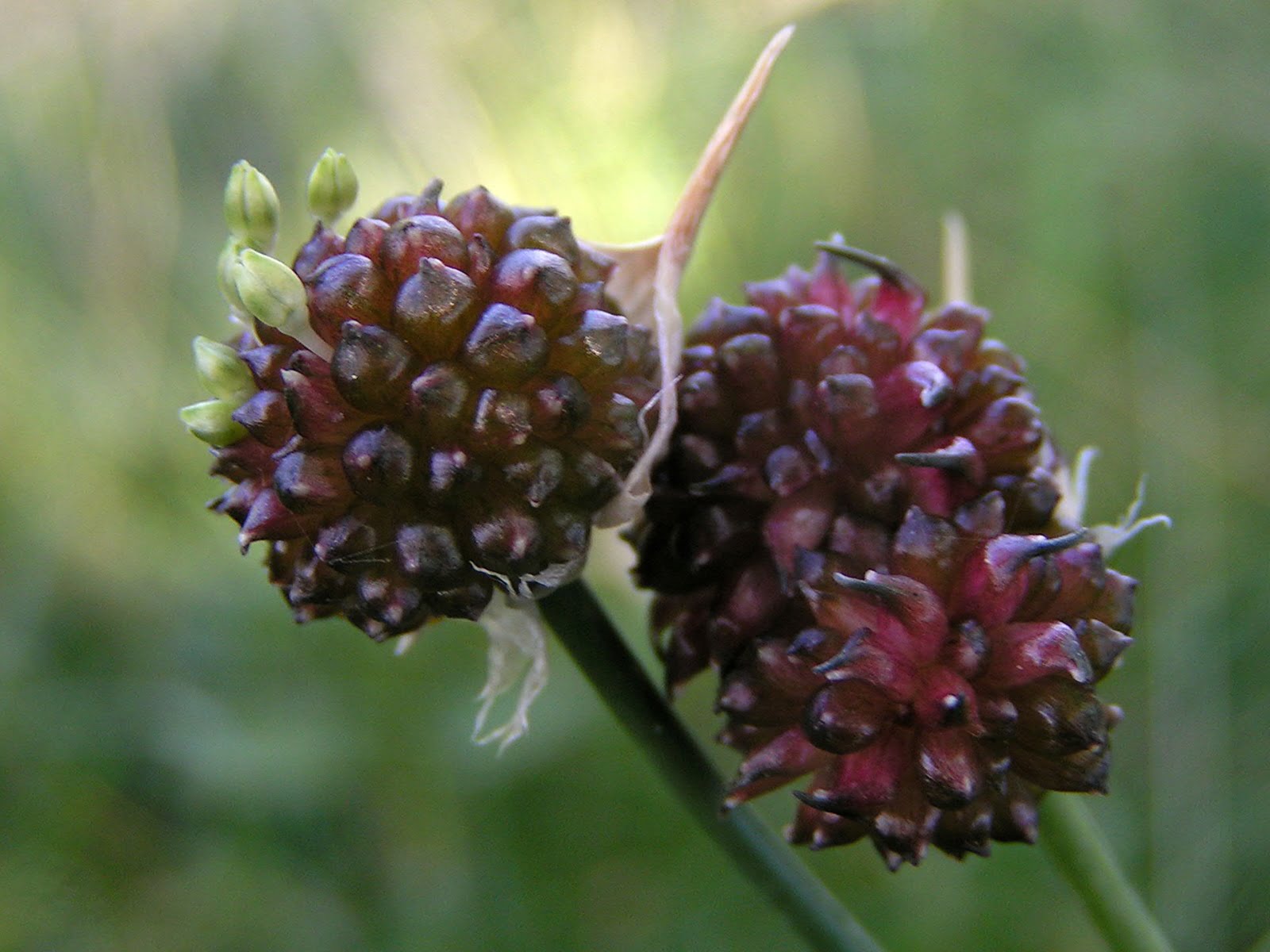

Allium vineale known as crow garlic or field garlic is a native species common across most of the United Kingdom. Crow garlic often grows in open grasslands and can be found in pastures, verges, woodland edges and along the sides of hedgerows.
Crowoften grows in clumps. The leaves are long hollow tubes, similar to chives but ovoid with a pronounced ridge running along one side. The plants achieve heights ranging from 30cm to over 80cm. Flowering is between April and July. Each bulb produces a single stalk topped with a spherical mass of red coloured bulbils and occasionally some tiny sterile white flowers. As the bulbils mature they often sprout on the plant producing small hairy green filaments.
All parts of this plant are edible. The flavour, a cross between onion and garlic, is sometimes compared unfavourably with other wild garlic species. Personally I like it a lot. The leaves are great eaten raw in salads or as a direct substitute for chives. Following emergence of the flower stalks the leaves become much tougher and loose their flavour. Collect in either early spring or the early autumn when a second flush of leaf growth occurs after flowering has ceased.
Garlic Mustard
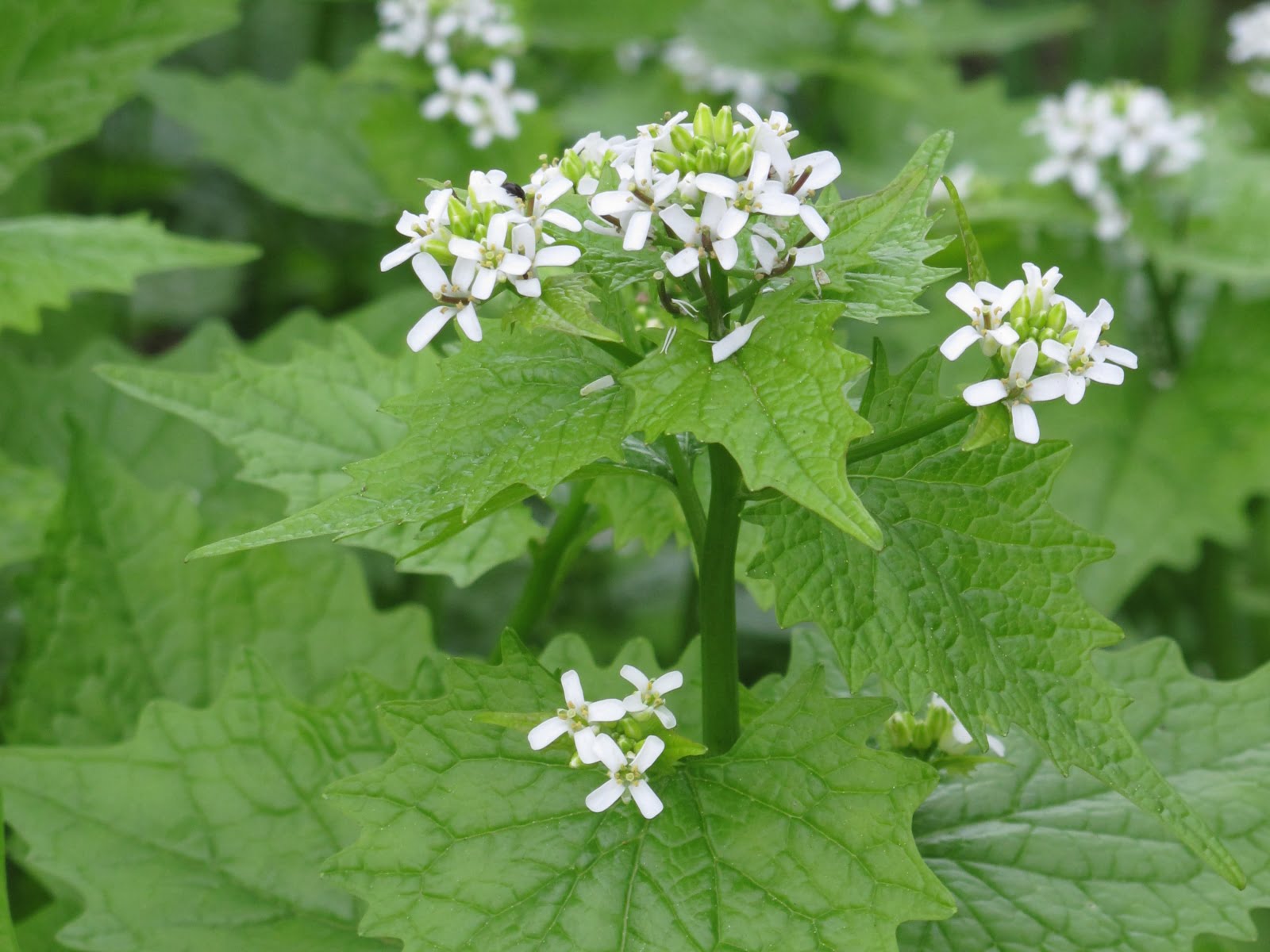
Our final other species of wild garlic is Alliara petiolata, known as jack in the hedge or hedge garlic. It differs significantly from the other plants listed here by being a member of the cabbages family and not of the onions. It is a native plant widely distributed throughout the country and typically found along hedgerows, ditches, embankments and the edges of woodland paths and clearings.
Garlic mustard is a bienninal, growing for two years. In its second spring it produces a tall single stemmed plant up to 120cm in height. These plants feature heart shaped leaves with toothed margins 10cm to 15cm in length. The tiny four-petaled flowers open in late spring in small clusters.
The young leaves from the top of two year old plants have the best flavour and can be eaten raw or cooked. The flowers are also edible as are the long seed pods and tiny seeds. Garlic mustard has been used as a herb, vegetable and medicinal plant for millennia. The flavour is a mixture of garlic and mustard but many will find the raw leaves a little to bitter for their tastes.
Wild Garlic Recipes


This was very helpful in helping me forage.
Thanks for the info!